Hearing that your exotic pet may need surgery can feel like a lot to take in. You want to know what the procedure involves, how anesthesia will be handled, what recovery may look like, and whether your pet is in the right hands.
That is where experience matters. Exotic pet surgery requires a Pasadena, CA team that understands small patients, species-specific anatomy, careful anesthesia, and the subtle ways exotic pets show pain or stress. From routine spays and neuters to advanced soft tissue, dental, nasal, ear, and emergency procedures, our surgical planning is built around the pet in front of us.
If your exotic pet needs a surgical procedure, call us at (626) 405-1777 to schedule an exam or surgical consultation.
Expert Surgical Care for Exotic Pets
Exotic surgery is never one-size-fits-all concerning anesthesia protocols or surgical techniques. A rabbit with bladder stones, a reptile with a reproductive concern, a chinchilla with a dental abscess, and a bird with a beak injury all need different handling, planning, monitoring, and recovery support.
Our team is used to working with rabbits, guinea pigs, chinchillas, ferrets, rodents, reptiles, birds, pot-bellied pigs, sugar gliders, and other unique species. That familiarity helps us make more thoughtful decisions before, during, and after surgery, even for advanced procedures.
Our Exotic Pet Surgical Services
Our surgical services cover both routine and advanced procedures for many exotic species. Our Pasadena veterinarian will explain whether surgery is recommended, what the procedure involves, and what options are available.
What to Expect If Your Exotic Pet Needs Surgery
The process begins with an exam and discussion of your pet’s diagnosis, overall health, and surgical options. Depending on the procedure, we may recommend lab work, imaging, or additional diagnostics before surgery to help us plan safely.
Before the procedure, we will review anesthesia, pain control, expected recovery, risks, costs, and at-home care. Because exotic pets have different needs than dogs and cats, we will also provide species-specific instructions for feeding, medication, warmth, activity, and monitoring.
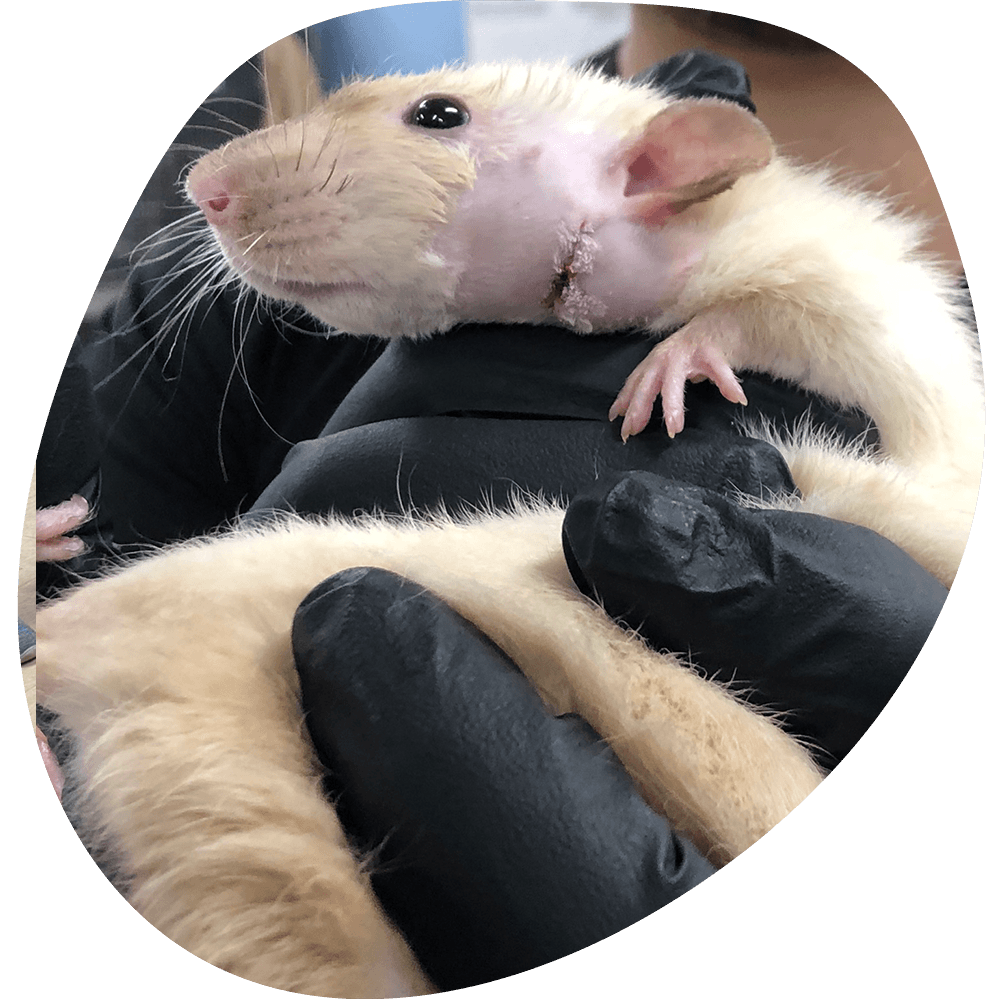
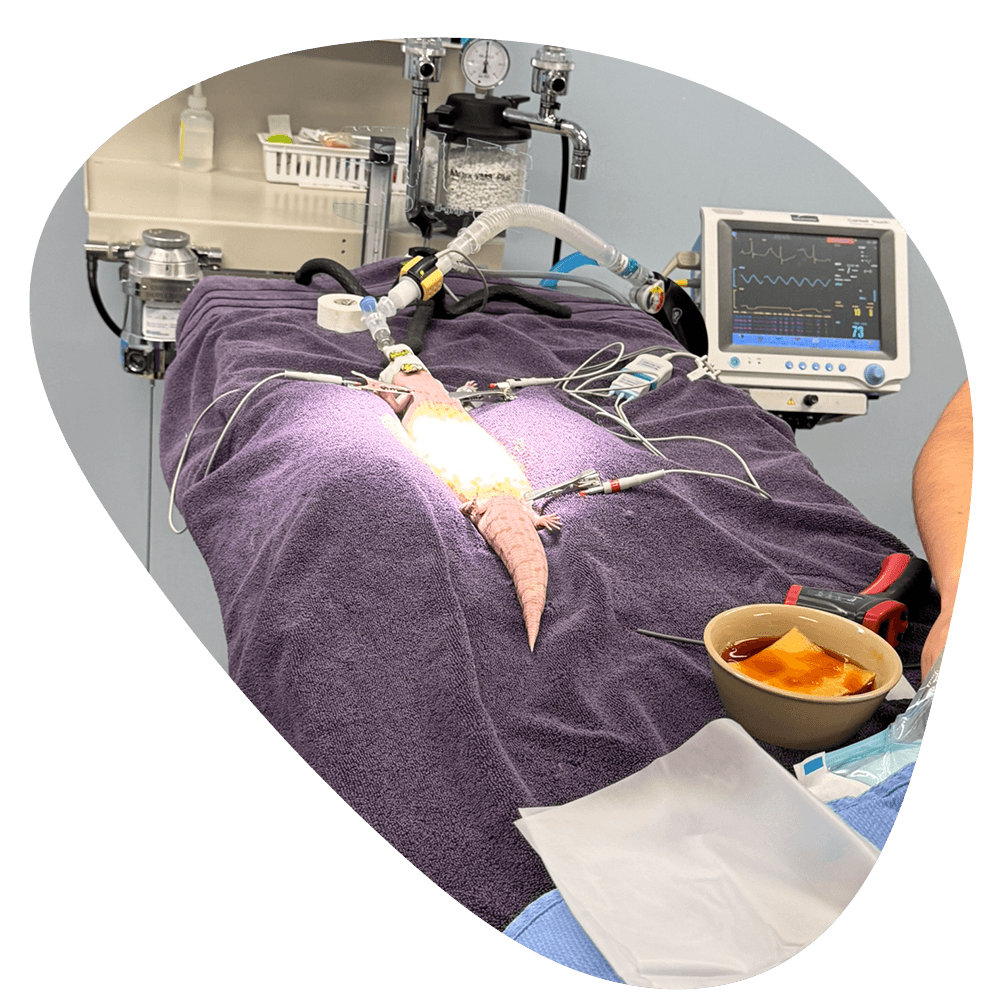
During surgery, your pet is carefully monitored by a team familiar with exotic patients. Afterward, we focus on recovery, comfort, and getting your pet back to normal behaviors, especially eating and moving appropriately.
Before your pet goes home, we will walk through medications, incision care, appetite monitoring, follow-up visits, and signs that should prompt a call. For more serious or post-operative mammalian cases, additional monitoring or special care arrangements may be discussed.